Mold Removal Near Civic Drive Station, Gresham OR
Found mold in a unit, a bathroom that never seems to dry out, or fresh damage after a leak in one of the apartments or condos near Civic Drive Station off NW Civic Dr? Gresham Mold Removal is the local crew that comes to your door, finds the moisture feeding the mold, contains the area, and removes the growth to an IICRC S520 standard. We serve the transit-oriented homes near the Civic Drive MAX stop across ZIP 97030 — call now.
Who Removes Mold Near Civic Drive Station, and How Soon
Civic Drive Station opened as one of the newest stops on the MAX Blue Line, at 1413 NW Civic Dr in 97030, and the buildings that grew up around it are almost all newer construction — mid-rise apartments, condos, and townhomes built with tighter envelopes and mechanical ventilation rather than the older leaky-but-breathable framing found elsewhere in Gresham. That matters for mold: a newer building traps humidity from showers, cooking, and drying laundry more effectively than it lets it escape, so condensation on cold surfaces, bathroom exhaust fans that vent into an attic instead of outside, and undersized HVAC dehumidification are the recurring culprits here rather than old roof leaks or crumbling foundations. Gresham Mold Removal is the Gresham-based crew that knows this difference and inspects accordingly — checking exhaust ductwork, window condensation lines, and shared mechanical closets first, then removing the growth to an IICRC S520 standard once the moisture path is confirmed.
Seen a ring of dark spots forming around a bathroom fan cover, or a window sill in a Civic Drive-area unit that stays damp no matter how often you wipe it? Those are textbook signs of a ventilation problem in newer construction, not a one-off spill. Call (713) 325-6192 and we will trace it to the source before recommending anything. Read the Civic Drive Station area overview for more on the neighborhood, or zoom out to mold removal in Downtown Gresham and mold removal in Gresham, OR for the wider picture.
Why Ventilation Problems Spread Fast in Stacked Buildings
Multi-unit buildings share more than walls — they share HVAC chases, plumbing stacks, and sometimes even bathroom exhaust runs that tie several units together. When one unit's exhaust fan is disconnected, blocked, or dumping moist air into a shared attic space instead of outside, the resulting condensation problem does not always stay contained to that unit; it can show up as a stain on a neighboring ceiling or a musty smell two doors down. That is the pattern we watch for near Civic Drive Station, and it is also why a quick response matters more here than in a detached house: a shared-system issue left alone doesn't just get worse in one place, it spreads sideways.
The EPA and CDC both note that mold can establish itself within roughly 24 to 48 hours once a surface stays wet, and in a sealed modern building that clock doesn't reset overnight the way it might in an older, more ventilated structure. If you're noticing condensation that won't quit or a smell that seems to be coming from a shared wall, call (713) 325-6192 and describe what you're seeing. We prioritize active moisture problems in multi-unit buildings precisely because of how fast they can cross unit lines.
Tracing Moisture Through a Shared Mechanical System
The inspection near Civic Drive Station usually starts at the exhaust fan, not the visible stain. We pull the bathroom fan cover to check whether it's actually venting to the exterior or just recirculating into a wall cavity or attic space — a shockingly common shortcut in fast-built multifamily construction. From there we follow the moisture path: window frames and sills where warm indoor air meets a cold single-pane or poorly sealed unit, HVAC supply and return lines for condensation, and any shared chase that runs between your unit and the one next door. Anything under roughly ten square feet, per EPA guidance, can sometimes be a DIY cleanup; a ventilation-driven problem that's been building for months usually isn't.
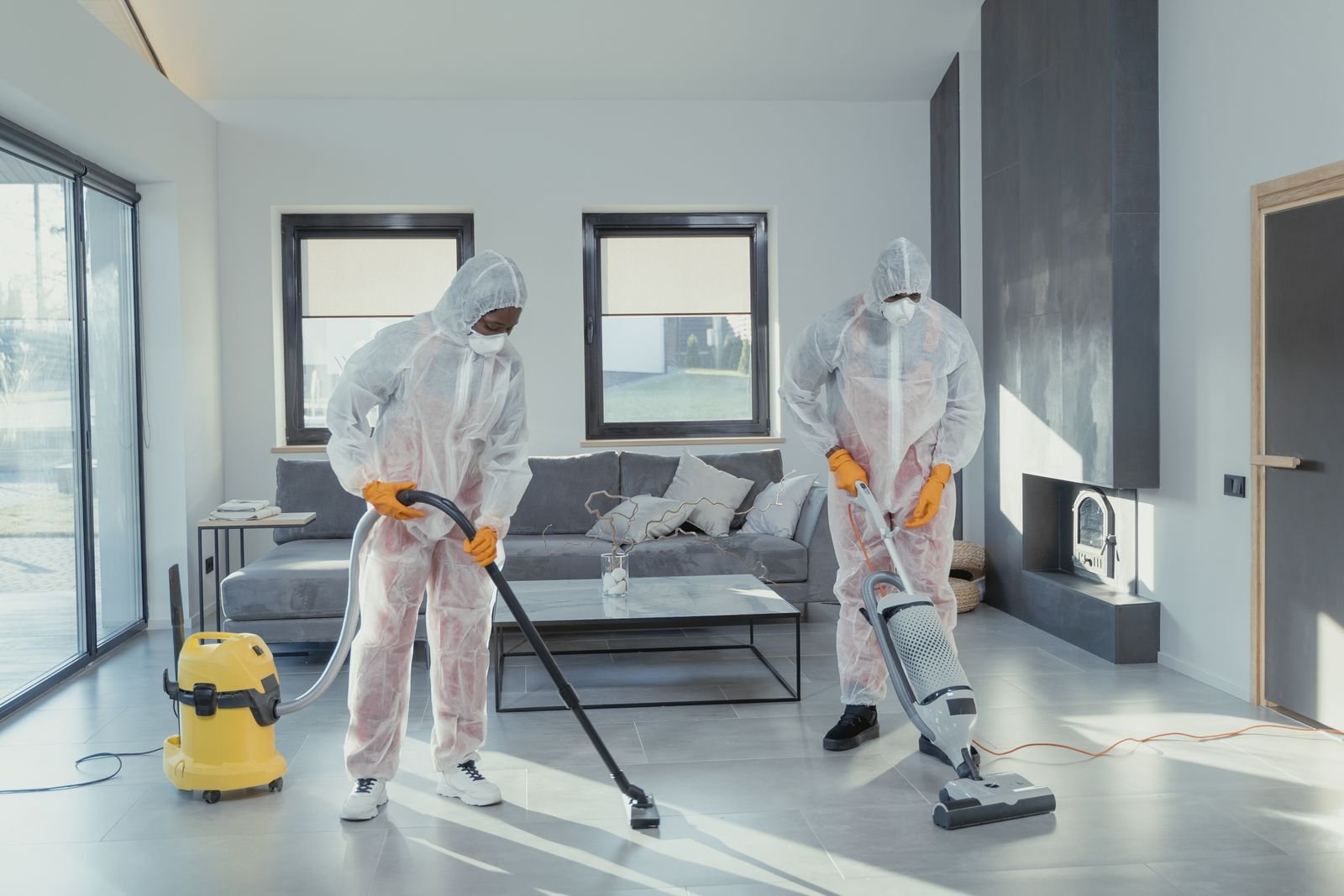
Once we've mapped the actual airflow and moisture path, the removal itself follows the IICRC S520 standard: seal the work area, run HEPA-filtered negative air so spores don't migrate into a neighboring unit through the same chase that caused the problem, physically remove what can't be cleaned, and verify dryness before closing up. For a stacked building, we also flag the ventilation fix itself — rerouting a fan, sealing a duct joint — because removing mold without correcting a disconnected exhaust line just buys you a repeat visit next winter. Full process detail lives on our IICRC S520 mold remediation process page.

Contained Removal Protects the Whole Building
The blocks around Civic Drive Station are mostly transit-adjacent apartments, condos, and townhomes, so this is the bulk of what we do here. Mold disturbed without containment sends spores into neighboring units through shared walls, plumbing chases, and outlet boxes. A sealed, negative-pressure work area keeps the problem where it is, and a verified clearance confirms the space is clean and dry before we close it up.
- HEPA filtration and negative air on every job
- The moisture source found and corrected, not just the stain
- Staged to keep residents and tenants in place
Pricing a Ventilation-Driven Job vs. a One-Time Spill
Two units near Civic Drive Station with the same square footage of visible mold can price very differently depending on the cause. A one-time spill that's been cleaned up promptly is usually a contained, single-surface job. A chronic exhaust or condensation problem is different: the growth is often thinner but more widespread, tracking along the exact path the moist air traveled, and the fix isn't complete until the ventilation itself is corrected — otherwise you're paying to remove the same mold again in six months. We price based on what the inspection actually finds, not a guess over the phone, and that includes telling you plainly if the root cause is a mechanical issue outside the removal scope.
No flat rate quoted sight unseen, no upsell padding — you get a scope and a number after we've actually looked at the unit. If you want the moisture source pinned down before committing to removal, a professional mold inspection is the right first step. Call (713) 325-6192 and we'll schedule an assessment for your specific unit near NW Civic Dr.
Covering the Newer-Construction Blocks Around Civic Drive
The apartments, condos, and townhomes built up around the 1413 NW Civic Dr MAX stop are a short trip from our base, which matters when a ventilation problem needs a same-day look before it spreads to a shared wall. See the Civic Drive Station area overview for neighborhood detail, mold removal in Downtown Gresham for the broader district, or mold removal in Gresham, OR citywide.
Call (713) 325-6192Frequently Asked Questions
Straight answers for the Civic Drive Station area.
Mold Near Civic Drive Station? Call Now.
Call Gresham Mold Removal at (713) 325-6192. Local inspection, the moisture source found and fixed, an IICRC S520 removal with HEPA containment, and verified clearance — for the apartments, condos, and townhomes near Civic Drive Station, ZIP 97030. Licensed, bonded, and insured.
(713) 325-6192Civic Drive Station area guide