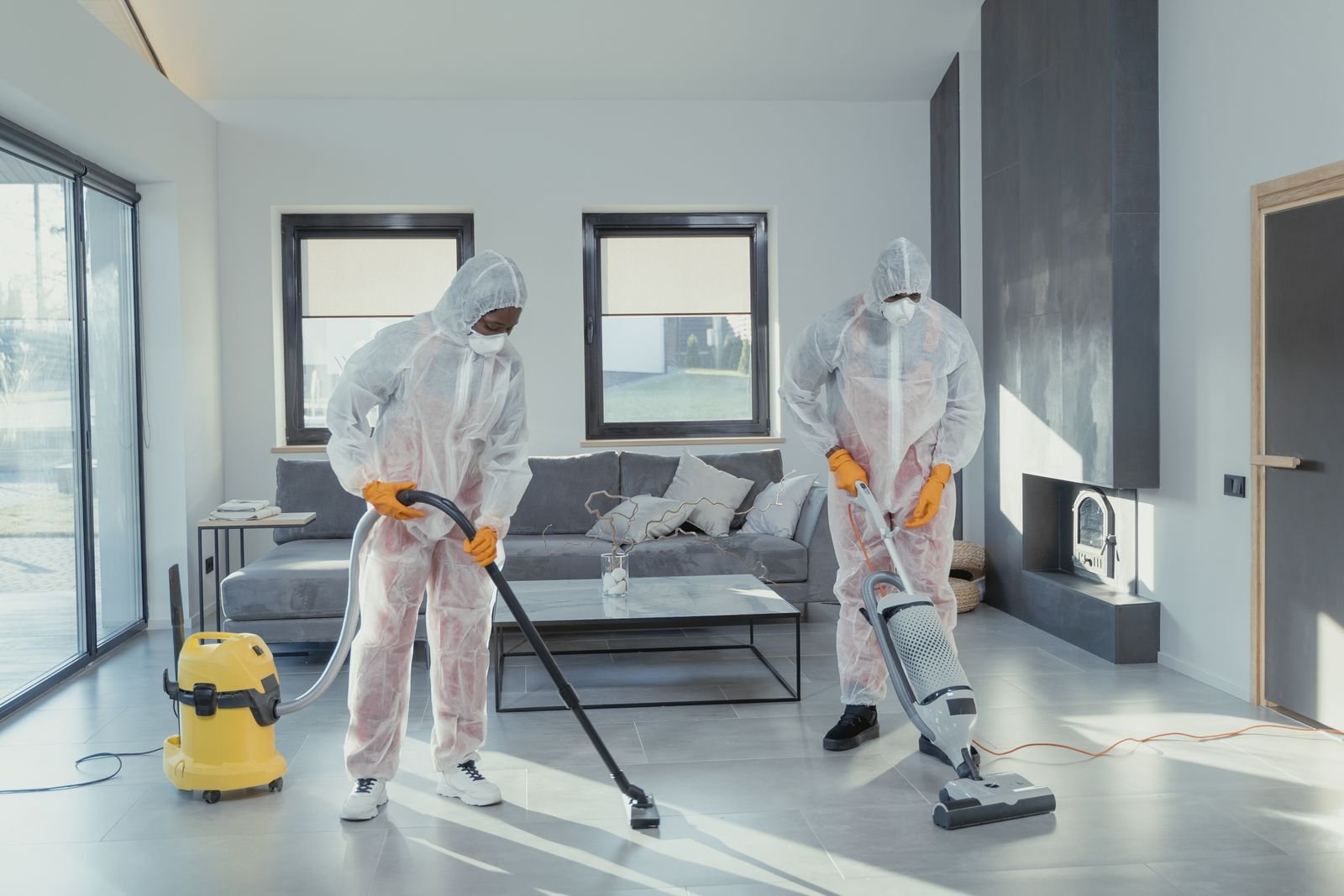
Mold Removal in Centennial, Gresham OR
Found a dark patch in the laundry room, a musty smell that will not clear from a back bathroom, or fuzzy growth after a slow leak behind the washer? Gresham Mold Removal is the local crew that comes to Centennial, finds the moisture feeding the mold, contains the area, and removes the growth to an IICRC S520 standard. We serve family homes across SE Gresham's Centennial neighborhood inside ZIP 97080. Call now to book.
Who Removes Mold in Centennial?
We do, and this is the page to book it. Gresham Mold Removal is a Gresham-based, come-to-you service-area business, and the Centennial neighborhood — the established family district in SE Gresham inside ZIP 97080, anchored by Sam Barlow High School — is squarely inside our coverage. We work mold and only mold, which is exactly why the inspection is sharper than a general handyman's, the plan is built around how moisture actually moves through a house, and fixing the water source behind the problem is part of the job rather than an afterthought. Centennial is mostly mid-size, single-family homes with finished basements, laundry rooms, and multiple bathrooms — the kind of stock where everyday humidity and a slow plumbing drip have plenty of quiet places to collect. That is the work we do here all day.
If you have already seen the signs — a spreading stain on a ceiling, fuzzy growth along a baseboard, or that earthy, can't-place-it odor in a closed room — there is no reason to wait. Mold can take hold within 24 to 48 hours of a leak, so a recent washer or water-heater problem gets priority. To see the wider neighborhood picture, step up to our overview of mold removal across Centennial, or read how we work citywide at Gresham Mold Removal. Whatever your Centennial address, the process is the same: confirm the mold, find the moisture feeding it, remove the growth under a recognized standard, and verify the area is dry before we close the job. Call (713) 325-6192 and we will get you on the schedule.
How Fast Can You Get to Centennial?
Quickly — SE Gresham is an easy part of our service area to reach, because we are a Gresham-based crew rather than a company driving in from across the metro. Reaching an address near Sam Barlow High School or the residential streets off SE 302nd Avenue is a short local trip, which is what lets us schedule Centennial-area jobs promptly and offer same-day assessments for urgent water-damage cases, depending on the day's schedule. When a pipe lets go or a washer overflows, getting eyes on it fast is what keeps a one-room problem from turning into a wall-and-subfloor problem.
Speed matters because mold runs on a timer. Spores are already present in every home, and once a surface stays wet, colonies can begin to establish within roughly a day or two — so the longer standing moisture sits, the wider the area that has to be opened up, dried, and treated, and the higher the cost. The moment you spot a stain, a smell, or visible growth, call (713) 325-6192, tell us your street and what you are seeing, and we will give you the soonest slot. We confirm the situation on arrival rather than guessing over the phone, so the plan fits your actual home and the room it started in.
Our Mold Removal Process for Centennial Family Homes
Every Centennial job starts with a real inspection. A technician confirms the mold, identifies the moisture feeding it, and maps how far it has spread before recommending anything — because the visible patch is almost always smaller than the dampness behind it, and removing mold without fixing the water just lets it grow back on the same schedule. In a family home that means a disciplined look at the laundry room, the second and third bathrooms, the area behind and beneath the washer, dishwasher, and water heater, and any finished basement where a slow drip has gone unnoticed. The EPA's guidance frames the scope: a patch under about ten square feet is often a reasonable do-it-yourself cleanup, but anything larger, anything tied to serious water damage, or anything inside an HVAC system calls for a professional and proper containment.
From there the work follows the IICRC S520 sequence. We seal the work area and run HEPA filtration so spores cannot drift into the rest of the house while we work — the single biggest difference between a contained professional job and a wipe-and-pray that spreads a one-room problem down the hall. Inside the containment we physically remove the mold and the porous materials it has grown into, since saturated drywall, baseboard, and insulation cannot be reliably cleaned. Then we dry the structure, treat the surfaces, and confirm the area is clean and the moisture is corrected before closing out. Because the EPA and CDC are clear that there is no safe airborne mold count to chase and that the real fix is controlling moisture, every plan ends with the leak repaired or flagged. For the full step-by-step, see our IICRC S520 mold remediation process.
Centennial Streets and Landmarks We Serve
Centennial takes in the family streets and schools of SE Gresham inside 97080. Book mold removal for the homes around each.
Sam Barlow High School
Mold removal for the family homes on the residential streets around the school at 5105 SE 302nd Ave. ZIP 97080.
Centennial Overview
The full neighborhood picture for mold removal across Centennial, including how SE-Gresham housing collects moisture. ZIP 97080.
Southeast Gresham
The wider SE Gresham area around Centennial, where laundry, bath, and crawl-space moisture drive most mold calls. ZIP 97080.
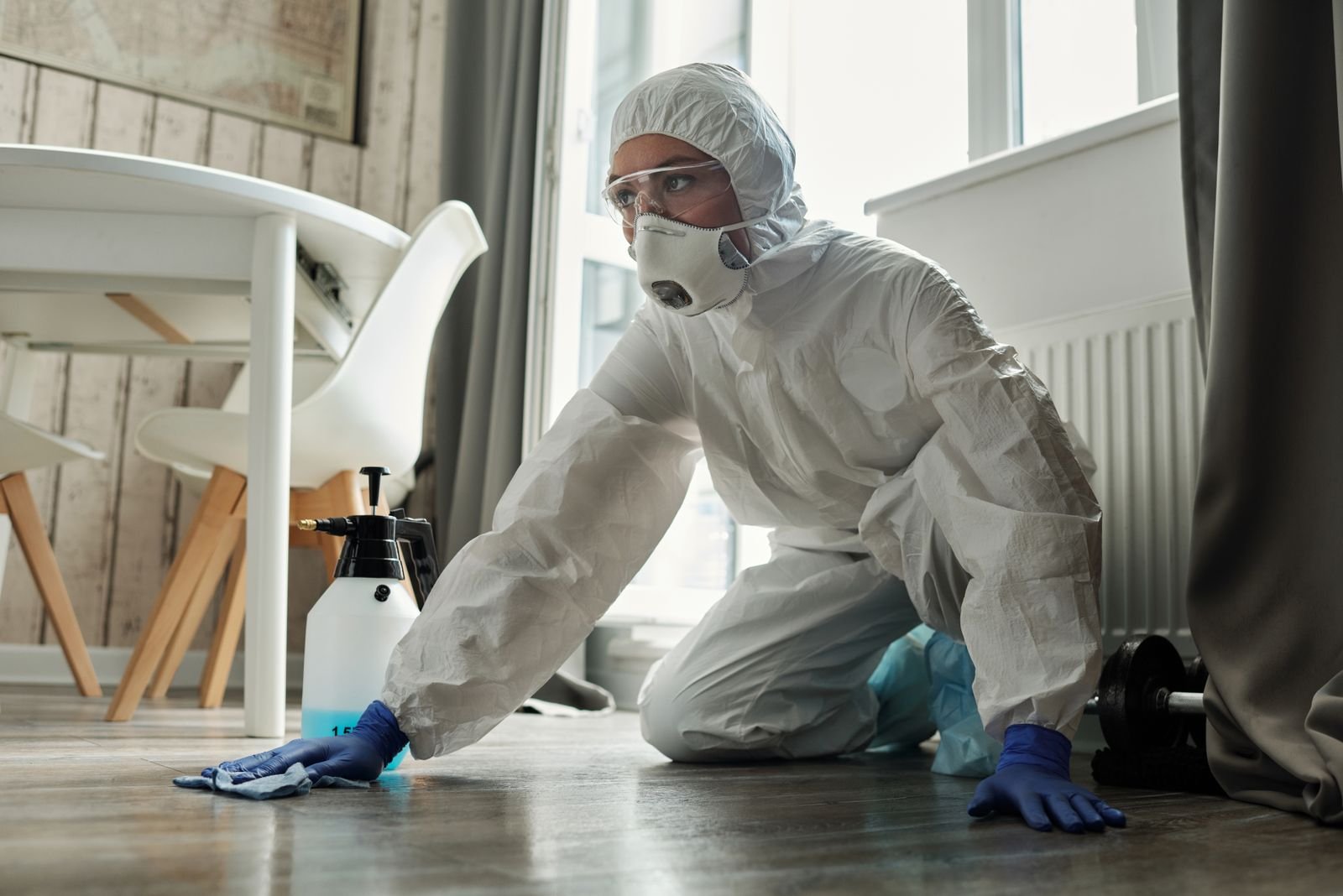
We Reach Mold Hidden Behind Cabinets and Appliances
In Centennial's family homes the visible spot is rarely the whole story. We contain the area, HEPA-filter the air, and open up only what is needed to reach growth behind a washer, dishwasher, or vanity cabinet — then dry the structure and fix or flag the leak feeding it. The same disciplined look goes up into attics and down into crawl spaces, where Pacific Northwest condensation quietly feeds mold on framing and insulation.
- Behind washers, dishwashers & water heaters
- Finished basements, baths & laundry rooms
- Attic and crawl-space condensation mold
What Mold Removal Costs in Centennial
The honest answer is that it depends on what the inspection finds, and we never quote a flat price sight unseen. Cost tracks the affected square footage, how hard the growth is to reach, and how much porous material has to come out. A small patch on an accessible wall is a modest job; mold behind a cabinet run, under a finished basement, or spread across attic sheathing takes more containment, more demolition, and more drying, so it lands higher. The EPA's roughly ten-square-foot line is the useful rule of thumb — under it, a careful homeowner can often handle the cleanup, while anything larger, anything tied to a real leak, or anything inside the HVAC system is professional territory.
That is why the price comes after the inspection, not before. A technician confirms the scope on site — the size of the affected area, the moisture source, and what is hiding behind the visible patch — and you get a clear plan and price before any work begins, with no surprise add-ons. If you want to confirm a suspected hidden problem first, a professional mold inspection is the right starting point and feeds directly into an accurate removal quote. Call (713) 325-6192 for a Centennial-specific assessment, whether it is one bathroom or a whole basement.
Why SE-Gresham Family Homes Grow Mold
It comes down to water and time, and Centennial's housing gives both plenty of room. A family home runs its showers, baths, and laundry every day, and all of that warm, wet air has to go somewhere — when a bathroom or dryer exhaust fan is missing, weak, or vented into an attic instead of outside, that humidity condenses on cool walls, ceilings, and cabinet backs and feeds mold over weeks. Behind the scenes, the slow leaks do the quietest damage: a dripping washer hose, a sweating water-heater fitting, or a dishwasher supply line can keep a hidden cavity damp for months before anyone smells it. Those everyday moisture points are exactly why we map the source before removing anything.
The Pacific Northwest climate stacks on top of all of it. Gresham sits through a long, cool, wet season — roughly eight months of rain that keeps outdoor humidity high and pushes indoor relative humidity higher than people realize, especially through winter. That high winter RH is enough on its own to grow mold on cold exterior walls, in poorly ventilated bathrooms, in damp crawl spaces, and on attic sheathing where warm indoor air condenses against a cold roof deck. None of it is exotic; it all traces back to moisture sitting somewhere it should not. The fix is the same every time — remove the mold, dry the structure, and correct the water so it does not come back.
One Local Team Across Centennial
From the streets around Sam Barlow High School off SE 302nd Avenue to the family homes throughout SE Gresham's Centennial neighborhood, it is the same Gresham-based crew across the area — a short local trip, not a cross-metro drive, with same-day assessments available for urgent water-damage cases. Step up to mold removal across Centennial for the neighborhood view, or read how we work citywide at Gresham Mold Removal.
Call (713) 325-6192Centennial Mold Removal Questions
Straight answers for SE Gresham's Centennial neighborhood.
Mold in Centennial? Call Now.
Call Gresham Mold Removal at (713) 325-6192. Local inspection, the moisture source found, an IICRC S520 removal, and verified clearance — for family homes across SE Gresham's Centennial neighborhood, ZIP 97080. Licensed, bonded, and insured.
(713) 325-6192Mold removal across Centennial